Investors Are Not Buying Up All The Homes
Friday, November 29, 2024
Add Comment
Displaying blog entries 11-20 of 362
With the holidays right around the corner, homeowners planning to move have a decision to make: sell now or wait? Some may even consider taking their house off the market until next spring. But is that the best choice? Because at this time of year, your home can really stand out.
Here's the thing: there are plenty of buyers out there who want to be in a new home by the holidays, and your house might be just what they’re looking for. As an article from Redfin says:
“. . . there is typically less inventory in the housing market this time of year, allowing your home to easily stand out among the available inventory. And though there are technically fewer buyers overall, the homebuyers that are looking are far more serious about finding a home within a specific timeframe. . . selling your home during the holidays might be your best present this year.”
Here are four key reasons you may not want to wait to sell your house.
1. Serious Buyers Are Looking Right Now
The holiday season doesn’t put a pause on the desire to own a home. Sure, some buyers might delay their search until next year, but others have a reason they need to move now. These buyers are highly motivated and ready to make a serious offer. As Investopedia says:
“Anyone shopping for a new home between Thanksgiving and New Year’s is likely going to be a serious buyer. Putting your home on the market at this time of year and attracting a serious buyer can often result in a quicker sale.”
2. You Have an Inventory Edge
While there are more homes coming to the market right now, overall, the number of houses available to buy is still low.
So, what does that mean for you? If you work with a trusted agent to price your house right, it could still sell pretty quickly. That’s because today’s buyers are on the hunt for quality options – and your home may be exactly what they’re searching for.
3. You Have Control Over Your Showings
Selling during the holidays doesn’t mean constantly disrupting your schedule. You have the flexibility to set up showings at times that work best for you. This is especially helpful during a busy season, and many buyers are likely to be more flexible with their schedules since they often have extra time off around the holidays.
Now, it’s always better to offer more flexible access to your house. But the reality is, you don’t have to stop the process entirely – especially when you have a great agent to help you navigate each step along the way.
4. Holiday Décor Can Make Your House Shine
For many buyers, a tastefully decorated home can create a warm, inviting atmosphere. It’s easy for them to imagine holiday gatherings and cozy nights in a space that feels just right. Keep your choices simple to let your home’s charm shine through. An article on holiday home-selling advises:
“If you’re selling around a holiday and have decorations up, make sure they accent—not overpower—a room. Less is more.”
There are plenty of good reasons to put (or keep) your house on the market during the holidays. Let’s connect to see if this is your moving season.
You want your house to sell fast. And you may be wondering how long the whole process is going to take. One way to get your answer? Work with a local real estate agent.
They have the expertise to tell you how quickly homes are selling in your area and what’s impacting timelines for other sellers. That way you have realistic expectations and can work together to come up with a plan that’s based on today’s market.
Here’s a high-level overview of just one of the factors a great agent will walk you through – the supply of homes for sale and how that impacts your process.
Over the past few months, the number of homes for sale has increased. This is good news when you move because it means you’ll have more options as you search for your next home. But it also means buyers have more to choose from, so if your house doesn’t stand out – it may take a bit longer to sell.
Available inventory is made up of new listings (homes that were just put up for sale) and active listings (homes that were already on the market but haven’t sold yet). And if you look at data from Realtor.com you can see a good portion of the recent growth is from active listings that are sticking around (see the blue bars in the graph below):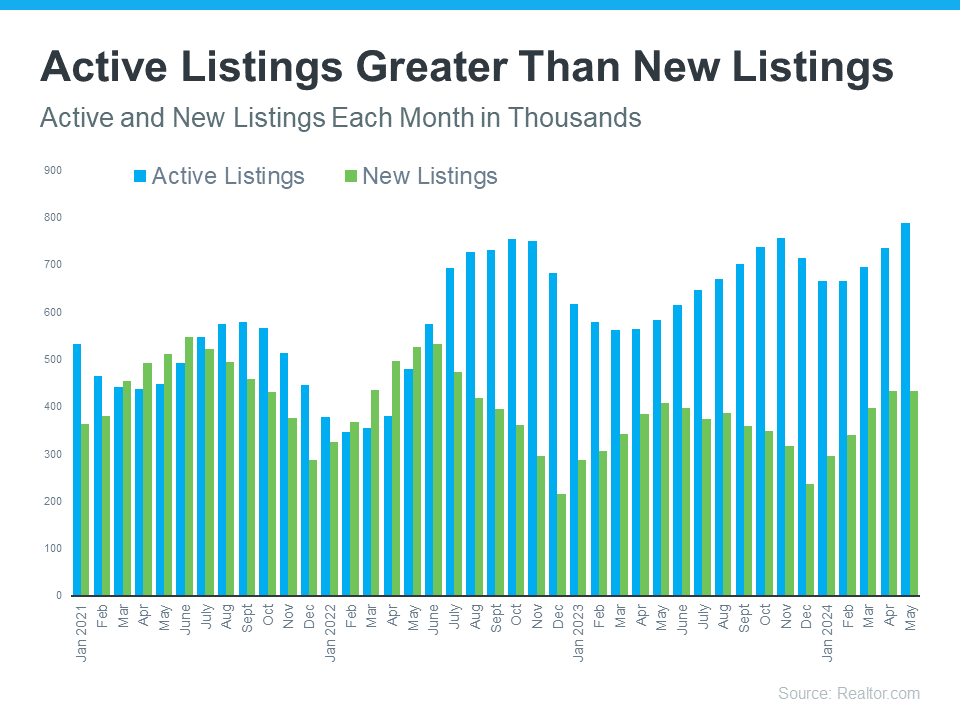
Think of the homes on the market like loaves of bread for sale in a bakery. When a fresh batch of bread is put out, everyone wants the newest and hottest one. But if a loaf sits there too long, it starts to get stale, and fewer people want to buy it.
The same goes for homes. New listings are the freshest and most sought-after. But if a home isn’t priced correctly, doesn’t show well, or it doesn’t have an effective sales or marketing strategy behind it, it can sit on the market and become less appealing to buyers over time.
Timing is important to you. You want to get this done, fast. By leaning on a pro, they’ll make sure your listing is fresh and doesn’t stick around long enough to go stale. As the National Association of Realtors (NAR) explains:
“Home sellers without an agent are nearly twice as likely to say they didn’t accept an offer for at least three months; 53% of sellers who used an agent say they accepted an offer within a month of listing their home.”
Your agent will factor the recent inventory growth into their plan and create a customized selling strategy for your house. The supply of homes for sale can vary a lot by area. So they’ll do things like share their valuable insights into what’s happening with supply in your market, help you price your home correctly, and create a marketing plan that gets your home noticed.
Don’t let your listing get stale—reach out to a real estate agent today to make sure your listing is fresh and appeals to buyers from the start. It makes a big difference.
If you want your house to sell fast, you need to work with a pro. Let’s connect so you’ve got someone who understands the current market trends and how to build a strategy around those factors, so your house is set up to sell quickly.


During the fourth quarter of last year, many housing experts predicted home prices were going to crash this year. Here are a few of those forecasts:
Jeremy Siegel, Russell E. Palmer Professor Emeritus of Finance at the Wharton School of Business:
“I expect housing prices fall 10% to 15%, and the housing prices are accelerating on the downside.”
Mark Zandi, Chief Economist at Moody’s Analytics:
"Buckle in. Assuming rates remain near their current 6.5% and the economy skirts recession, then national house prices will fall almost 10% peak-to-trough. Most of those declines will happen sooner rather than later. And house prices will fall 20% if there is a typical recession.”
“Housing is already cooling in the U.S., according to July data that was reported last week. As interest rates climb steadily higher, Goldman Sachs Research’s G-10 home price model suggests home prices will decline by around 5% to 10% from the peak in the U.S. . . . Economists at Goldman Sachs Research say there are risks that housing markets could decline more than their model suggests.”
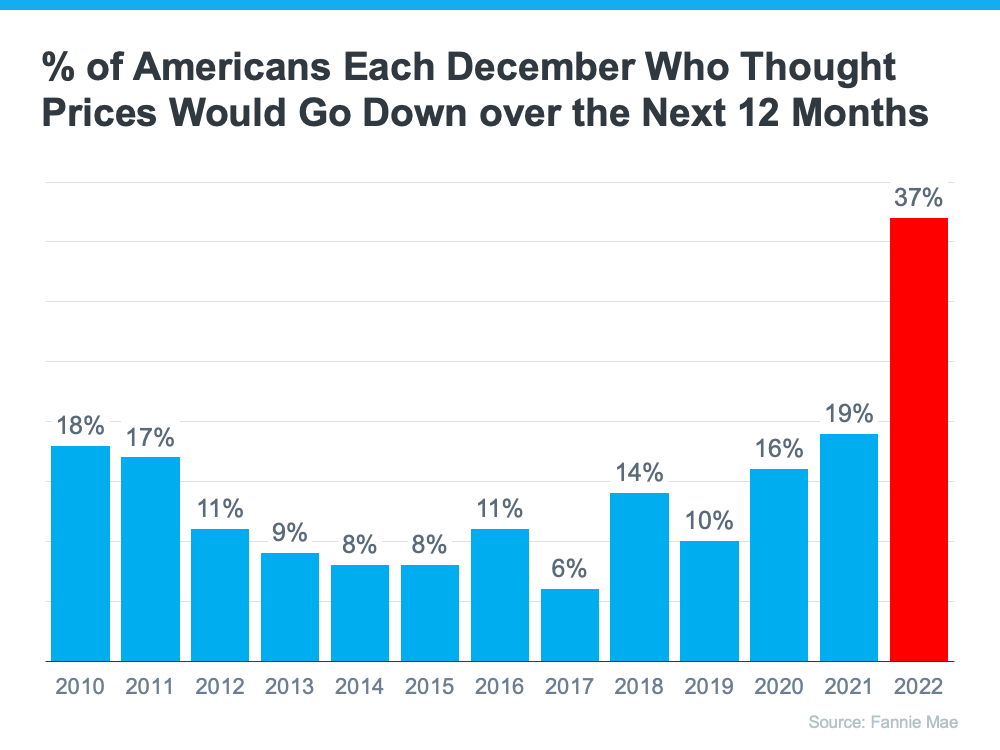
These forecasts put doubt in the minds of many consumers about the strength of the residential real estate market. Evidence of this can be seen in the December Consumer Confidence Survey from Fannie Mae. It showed a larger percentage of Americans believed home prices would fall over the next 12 months than in any other December in the history of the survey (see graph below). That caused people to hesitate about their homebuying or selling plans as we entered the new year.
However, home prices didn’t come crashing down and seem to be already rebounding from the minimal depreciation experienced over the last several months.
In a report just released, Goldman Sachs explained:
“The global housing market seems to be stabilizing faster than expected despite months of rising mortgage rates, according to Goldman Sachs Research. House prices are defying expectations and are rising in major economies such as the U.S.,. . . ”
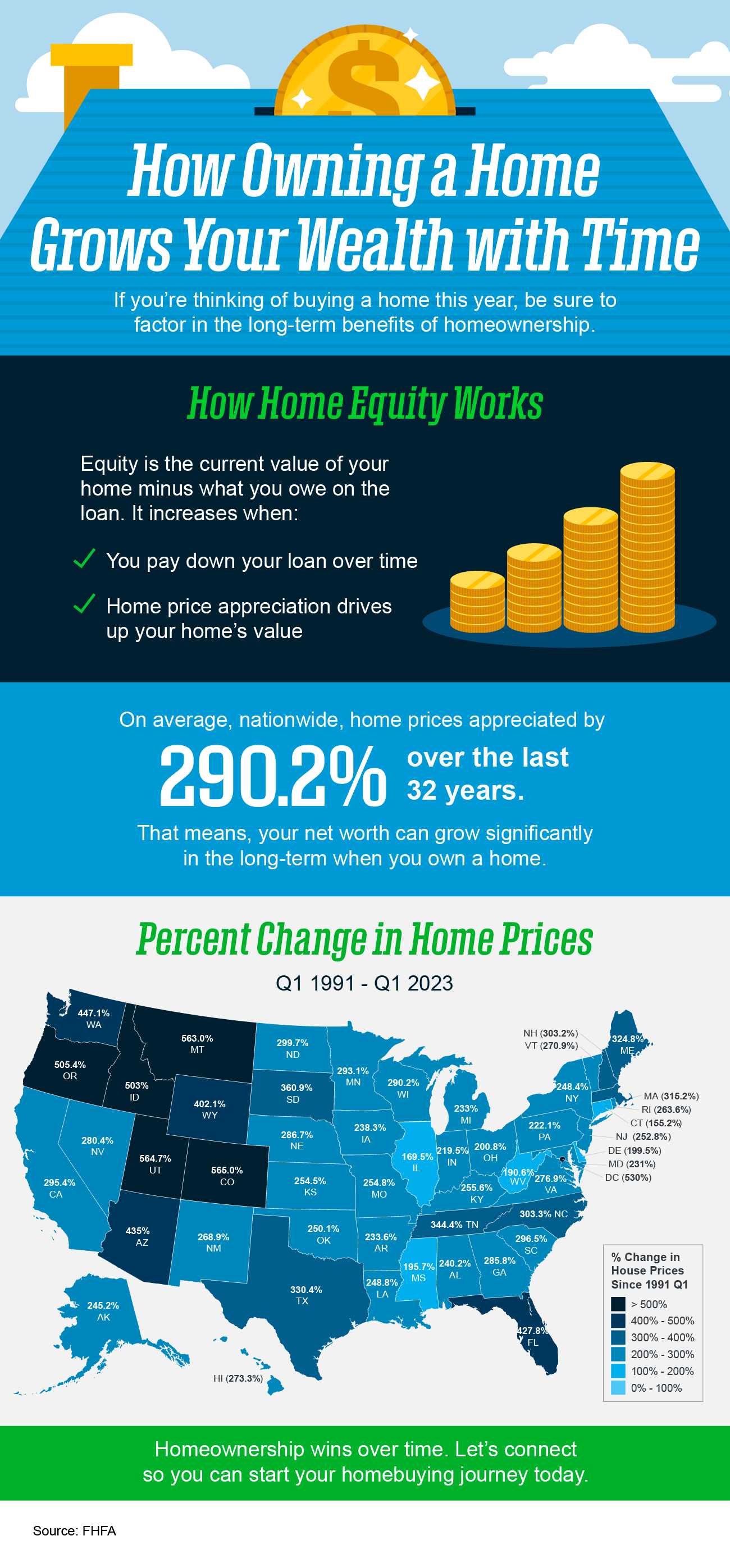
Those claims from Goldman Sachs were verified by the release last week of two indexes on home prices: Case-Shiller and the FHFA. Here are the numbers each reported:
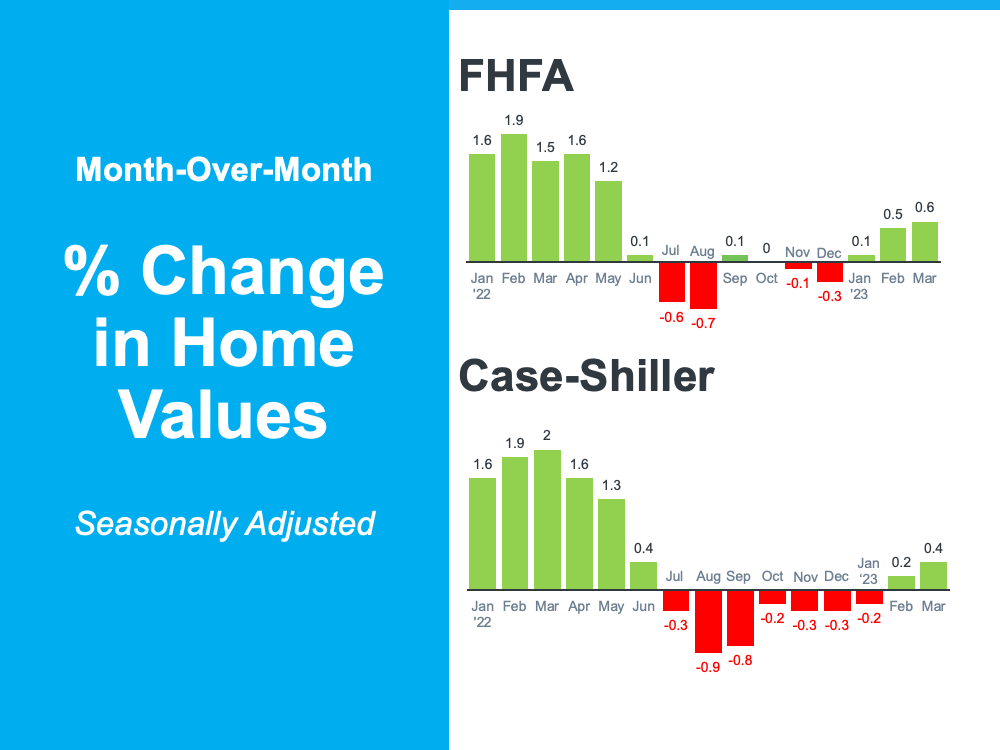
Home values seem to have turned the corner and are headed back up.
When the forecasts of significant home price depreciation were made last fall, they were made with megaphones. Mass media outlets, industry newspapers, and podcasts all broadcasted the news of an eminent crash in prices.
Now, forecasters are saying the worst is over and it wasn’t anywhere near as bad as they originally projected. However, they are whispering the news instead of using megaphones. As real estate professionals, it is our responsibility – some may say duty – to correct this narrative in the minds of the American consumer.
I just read this recent article by KOIN on the cites with the fastest growing home prices in the Portland-Vancouver area. Our Mt. Hood area dominates the landscape with the following stats:


Most impressive was the five year price change with all in the over 50% range!
Camus, Washington placed # 1 and Dundee, Oregon placed # 2.
Displaying blog entries 11-20 of 362